Global Curtain and Home Textile Market Update
Market Overview The global curtain and home textile industry continues to show steady growth as residential renovation, hospitality projects, and commercial real estate gradually recover in key markets. Demand is being driven by consumers seeking a balance between functionality, aesthetics, and cost efficiency, particularly in blackout, semi-blackout, and decorative jacquard curtains. Emerging markets in Africa, the Middle East, and South America are becoming increasingly important for global manufacturers, with wholesalers and project buyers focusing on stable supply, competitive pricing, and reliable lead times.
Key Trends Shaping the Industry
1. Rising Demand for Ready-Made Curtains
Ready-made curtains are gaining market share due to faster delivery, standardized sizing, and lower minimum order quantities. Retailers and distributors prefer in-stock programs that allow them to respond quickly to market demand without holding excessive inventory.
2. Functional Fabrics Remain a Priority
Blackout and high-shading curtains (80%–95% light blocking) continue to be core products, especially for bedrooms, hotels, and rental apartments. Double-layer matte fabrics and coated materials are widely adopted for their durability and consistent shading performance.
3. Design-Driven Growth
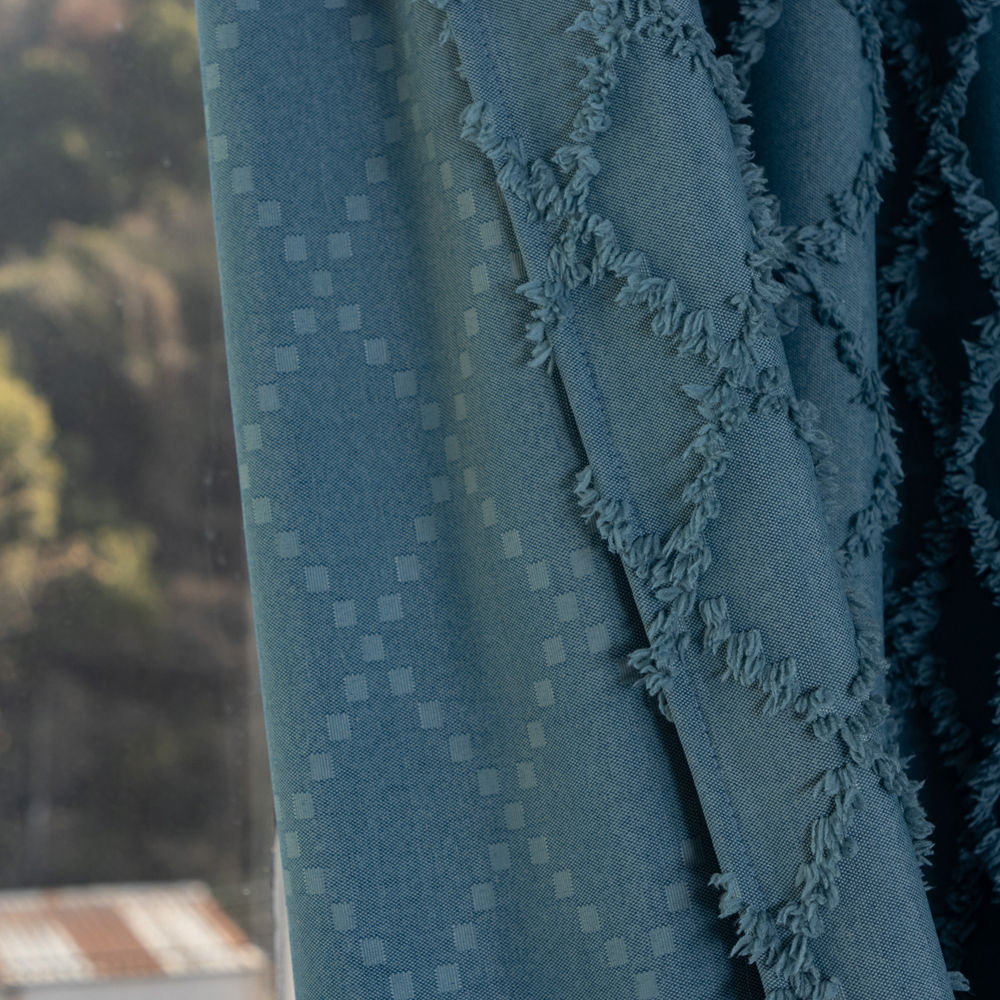
Geometric patterns, digital printing, and textured jacquard fabrics are trending in both residential and commercial segments. Buyers are increasingly looking for designs that combine modern aesthetics with long-term durability, suitable for repeated washing and daily use.
4. OEM and Private Label Services Expand
More international buyers are shifting toward OEM/ODM and private label cooperation. Customized packaging, branded washing labels, and exclusive designs help importers and retailers differentiate their products in competitive local markets.
Supply Chain and Production Outlook
Chinese curtain factories continue to play a central role in the global supply chain due to their mature manufacturing capabilities, wide fabric selections, and scalable production capacity. Long-term stock programs and flexible customization options are becoming standard requirements for overseas buyers.
At the same time, logistics costs are stabilizing compared to previous years, allowing buyers to plan replenishment orders more efficiently and maintain consistent pricing strategies.
Outlook for 2026
Looking ahead, the curtain and home textile industry is expected to maintain moderate growth. Manufacturers that can offer a combination of stable inventory, design innovation, and professional OEM services will be best positioned to meet the evolving needs of global wholesalers, retailers, and project customers.
For buyers, working with reliable factories that understand international standards and market trends remains a key factor in building sustainable, long-term partnerships.
Leave a Comment
No comments yet. Be the first to comment!